Tree Trimming in Roseville, CA
We prune yard trees and native oaks so dead wood comes out, roofs and driveways get clearance, and the tree keeps a healthy shape.
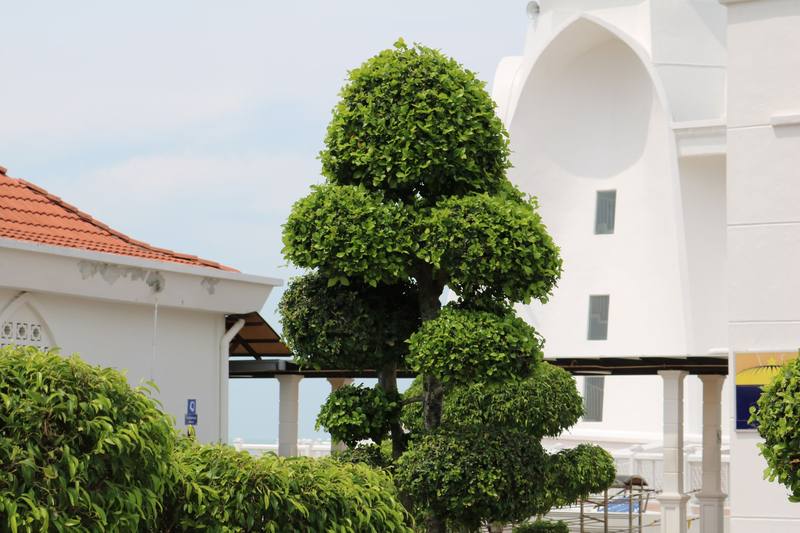
Most trees only need trimming when something has changed: a limb is resting on the roof, a branch has died, or the canopy has grown too heavy over the house. We trim trees across Roseville and nearby towns. We take out what is causing the problem and leave the rest of the tree alone.
What tree trimming is for
A healthy yard tree can go for years without any help. Trimming becomes worth doing when a tree starts to get in the way of a roof, a driveway, a fence or the people walking under it, or when it is carrying dead or damaged wood that could fall. Good trimming removes the wood that is causing trouble and lets the tree keep growing in its natural form.
These are the trimming jobs we do most often around Roseville:
We do not top trees. Topping means cutting the main stems back to stubs. It looks tidy for one season. Then the tree pushes out a thick bunch of weakly attached shoots, and those break more easily than the limbs that were cut. If you have been told a tree needs topping, it usually needs thinning or a few reduction cuts instead.
- Removing dead, broken or hanging branches
- Raising the lower canopy so you can walk, mow or park underneath
- Cutting back limbs that rest on a roof, gutter or fence
- Thinning a dense crown so wind can pass through it
- Pulling branches back from the service line that runs to the house
Signs a tree needs attention
You can spot most problems yourself. Stand back from the tree in daylight and look for these:
One dead branch is not an emergency. A large dead limb over a driveway, a bedroom or a play area should come down before the winter winds arrive. If you see a crack running through the main trunk, or the tree has started to lean when it did not before, call us before anyone trims it. At that point the question is the whole tree, not one branch.
- Branches with no leaves in spring or summer while the rest of the tree is green
- Bark peeling off a limb, or fungus growing on the trunk or a branch
- A limb cracked where it joins the trunk, or two branches rubbing against each other
- Branches lying on the roof, scraping the siding or filling a gutter every week
- A canopy so thick you cannot see sky through it
- Clusters of straight upright sprouts growing from old cuts
What causes tree problems in Roseville yards
Roseville summers are long, hot and dry, and most of the rain falls between late fall and early spring. Trees get through the summer under stress, and then the first strong wind of the season hits them while they still carry a full load of leaves, sometimes wet ones. That is when weak limbs tend to come down.
Many Roseville neighborhoods were built in the last few decades, and the trees planted with them have now grown large for their lots. Fast-growing trees such as ash, pistache, sycamore and flowering pear were often planted close to houses and sidewalks. Flowering pears form narrow, tight forks that split under weight. Ash and sycamore send long limbs out over roofs. A tree that looked small beside a new house can now stand well above the ridge line.
Yard trees also tend to grow lopsided, reaching toward the open sun over a street or a neighbor's yard. Over time that one-sided weight pulls on the trunk and the roots. The clay soils common in this area keep many roots shallow, so we watch for heavy limbs leaning over a house and decide how much weight to take off them.
Native oaks need a lighter hand
There are a lot of native valley oaks and interior live oaks in Roseville, and many of them are older than the houses around them. Oaks need more careful pruning than most yard trees. Large cuts on an old oak heal slowly. Taking too much live canopy at once can also stress a tree that is already coping with summer drought and lawn sprinklers it never evolved with.
On oaks we keep it conservative. We take out dead and hazardous wood, give clearance where it is needed, and otherwise leave the living canopy alone. The city has rules protecting native oaks, and some work on them needs a permit. If your tree is a native oak, we will go over the plan with you before we start. Check with the city if the job involves more than light pruning.
Trim or remove?
Most of the trees we look at need trimming, not removal. Removal makes sense when the trunk is badly decayed, when the tree is dead or nearly dead, when the roots have failed and the tree is leaning, or when a large tree was planted a few feet from a foundation and has run out of room.
Trimming is the better choice when the problems are in the branches rather than the trunk. A healthy tree with a few dead limbs and one branch on the roof can usually be sorted out in a few hours, and it will keep shading the house for years. If we think a tree should come down, we will explain why and leave the decision to you. Since we also grind stumps, a removal can be taken below the soil line as part of the same job if you want the spot cleared.
How often a tree needs trimming
There is no fixed schedule. Young trees benefit from a light structural trim every few years while they are small, because a cut the size of your thumb now saves a cut the size of your leg later. Mature trees in good health may only need attention every several years, or when something changes, such as a limb reaching the roof.
Fast growers like ash and sycamore need work more often than slow growers like oaks. If you are not sure where to start, have us look over every tree in the yard in one visit. You get a plan you can spread over a few seasons, so you do not have to do everything at once.
What a visit involves
We start by walking the yard with you and looking at each tree you are concerned about. We show you what we would cut and what we would leave, and explain why. You get a quote before any work is scheduled.
On the day of the work, we protect what is under the tree as well as we can. Larger limbs are lowered on a rope instead of being dropped onto lawns or roofs, and we make each cut just outside the branch collar so the tree can seal the wound. We clear the brush and rake the area before we leave.
Timing helps. Most deciduous trees prune well in late fall and winter, when the leaves are off and you can see the structure. Deadwood and clearance work can be done any time of year. Our hours are Monday to Friday, 7:00 AM to 7:00 PM, and Saturday, 8:00 AM to 5:00 PM. We do not take after-hours or emergency calls, so deal with obvious hazards before storm season. We also work in Rocklin, Granite Bay, Citrus Heights, Folsom and the other towns around Roseville.
FAQ
Common questions about tree trimming
Most deciduous trees prune well in late fall and winter, when the leaves are off and the branch structure is easy to see. Dead branches and limbs touching a roof can be cut at any time of year. It makes sense to deal with hazards before the winter winds start.
Yes, and we keep oak pruning light: dead wood, hazards and needed clearance, with little cutting into the living canopy. Roseville protects native oaks, and some work on them requires a city permit. If more than light pruning is planned, check with the city before work begins.
Usually much less than people expect. We try not to remove more than about a quarter of the live canopy in one visit, and on older trees and oaks we take less than that. Removing too much at once stresses the tree and tends to produce weak regrowth.
We trim branches away from the service line that runs from the pole to your house. Branches touching the high-voltage lines on the poles are the electric utility's job, so call them for those. If you are not sure which kind of line it is, ask us and we will take a look.
Yes. We clear the cut branches and brush and rake the area before we leave. If you want some wood left for firewood or mulch, tell us when we give the quote.
No. We work Monday to Friday from 7:00 AM to 7:00 PM and Saturday from 8:00 AM to 5:00 PM, and we are closed Sunday. If a tree is down on a house or a line, call the utility or emergency services first, then call us during business hours for the cleanup.
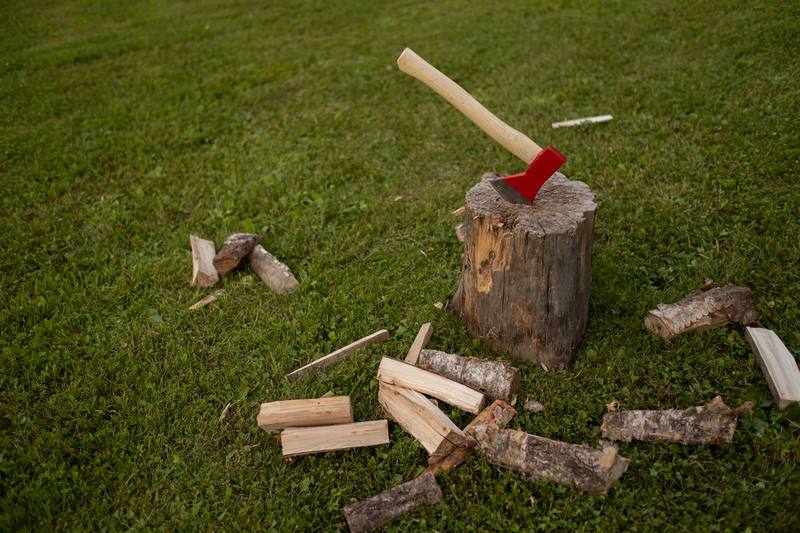
Get Started
Send us a photo of the stump
Take a picture with something next to the stump for scale, tell us what you want in that spot, and we will get back to you with a quote. You can also call during business hours.