Root Grinding in Roseville, CA
We grind down surface roots that lift pavers, catch mower blades or get in the way of new planting, so you can use your yard again.
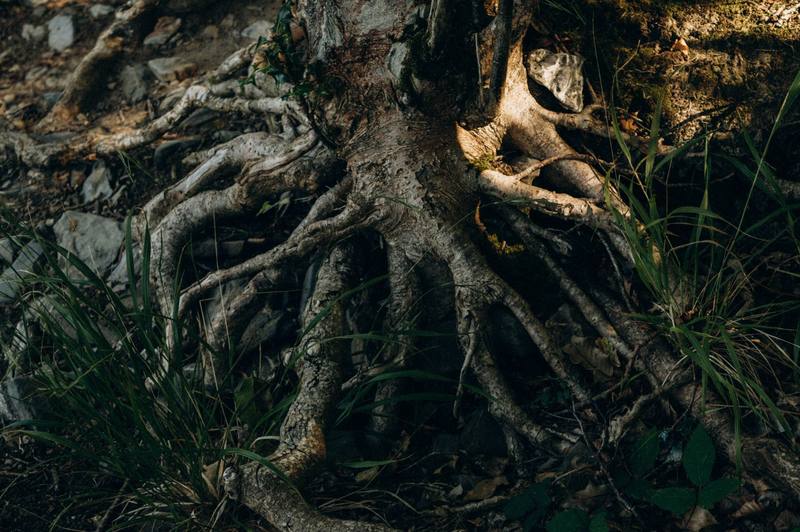
Roots that spread out from a tree or an old stump can ridge a lawn, rock a paver path and make planting close to impossible. We grind those roots below grade so the ground is level and workable. Before we start, we look at where each root goes and what it is near.
What root grinding is, and when you need it
Root grinding takes down the roots that spread outward from a tree or stump. Some sit right on the surface and some run just under it. Stump grinding clears the trunk area, and the roots that run across a lawn or under a walkway are a separate job. We grind them down far enough that you can lay sod, put down soil, set pavers or plant a bed over the spot.
Most root calls we get in Roseville come down to a handful of problems:
Root grinding does not fix every root problem. If roots are getting into a sewer line or pressing on a foundation, you usually need a plumber or a structural opinion first. If what you are seeing is something grinding can't solve, we will tell you.
- Surface roots that catch a mower blade or trip someone crossing the lawn
- Roots lifting pavers, the edge of a patio slab or a garden walkway
- Roots left behind after a stump was ground, which leave the ground lumpy and get in the way of new planting
- Roots heading toward a fence line, a raised bed or an irrigation line
What to look for in your yard
Roots usually show themselves before they cause real damage. Look for ridges in the lawn running outward from a tree or an old stump, a strip of grass that browns faster than the rest in summer, pavers that rock when you step on them, or a walkway section with one edge sitting higher than the next. Sprinkler heads that keep tilting, or a drip line that keeps getting pinched, can also mean a root is growing underneath.
The most important question is whether the root belongs to a living tree you want to keep. Roots from a tree that has already been removed are fair game. They are dead, and once ground they break down faster in the soil. Roots from a healthy tree are a different matter. They carry water and anchor the tree, and cutting a large one can weaken the tree or make it less stable, especially on the side that takes the wind.
If you are not sure which tree a root comes from, that is fine. Following roots back to their source is part of what we do on a visit.
What usually causes surface roots in Roseville
Soil is a big part of it. A lot of Roseville sits on heavy clay, and in some neighbourhoods there is a dense layer not far below the topsoil. Roots struggle to push down through that, so they spread sideways and rise toward the surface, where water and air are easier to find.
Watering habits add to it. Lawn sprinklers that run short cycles every day keep the top few inches damp while the ground below stays dry, so roots go where the water is. In hot, dry Roseville summers, trees look hard for that moisture, and irrigated turf is the easiest place to find it.
The trees themselves matter too. Many subdivisions in and around Roseville were planted with fast-growing shade trees in narrow park strips and small front yards. Sweetgum, ash and sycamore are all known for strong surface roots, and a park strip between a sidewalk and a curb leaves those roots nowhere to go but out and up. Native oaks on older and larger lots spread wide as well, though they call for more caution, which we cover below.
Grind the root, or deal with the tree
If the root comes from a healthy tree you want to keep, the aim is to take out as little as possible. Grinding a section of root where it lifts a paver path several feet from the trunk is often reasonable. Grinding a thick root close to the trunk often is not. Arborists generally advise keeping cuts well away from the trunk, and the bigger the tree, the bigger that distance should be. If a cut looks risky for the tree, we will say so before we touch it.
If the same tree lifts your hardscape year after year, grinding only buys time. Roots grow back, and a tree in a cramped strip will keep pushing. At that point it may make more sense to remove the tree and grind out the stump and main roots in one go. We do Tree Removal, Stump Grinding and Root Grinding, so the whole job can be planned together.
If the tree is already gone and only the stump is left, grinding the stump and its main roots on the same visit is usually the simplest approach. Doing both at once means you only have to fill and replant the area once.
Native oaks need extra care in Roseville. The city has rules protecting native oaks, and work on roots inside an oak's protected area can need a permit. Before any root work near a native oak, check with the city. If the oak has already been removed, our Oak Stump Removal service covers the stump and its root plate.
What a visit involves
We start by looking. We trace where the roots run, what they sit close to and whether the tree is still alive. We will ask about sprinkler lines, drip tubing, low-voltage lighting and any cable or pipe you know is buried. California requires buried utilities to be marked before digging, and we make sure lines are marked before we grind near them.
The grinding itself uses a machine with a toothed cutting wheel that chews the root into chips. We work along the root and take it down below the surface, deep enough to lay soil and sod over it or reset pavers. Where a root runs under a slab or a path, we can usually reach the parts on either side, but we can't grind what sits directly under concrete without lifting it first.
Access matters. Side yard gates in many Roseville homes are narrow, so when you call, tell us roughly how wide the gate is and whether there are steps or a slope between the street and the work area. That tells us which machine to bring.
When we are done, there will be a trench or patch of ground chips. Some people rake the chips into planting beds as mulch. In a lawn area, most of them should come out and be replaced with topsoil, because grass struggles to grow in fresh wood chips. We will talk through what makes sense for your yard.
Getting your yard back to use
Once the roots are gone, the ground settles a little over the following months as leftover root material breaks down. Expect to top up low spots with soil before final grading. If you are putting down sod or seed, fall is a good time in Roseville, because the cooler weather and winter rain give new grass a chance to root before the summer heat.
For trees you are keeping, changing how you water helps keep the problem from coming back. Watering more deeply and less often encourages roots to grow down instead of along the surface. Keeping sprinklers from soaking the base of the trunk helps as well.
If you would like us to take a look, call (916) 010-0003. We work Monday to Friday from 7:00 AM to 7:00 PM and Saturday from 8:00 AM to 5:00 PM. A couple of photos of the roots and the gate help us give you a clearer quote.
FAQ
Common questions about root grinding
It can, depending on how big the root is and how close it is to the trunk. Grinding a smaller root well away from the trunk is usually fine for a healthy tree. Cutting thick roots near the trunk can weaken the tree or make it less stable. We look at that before we cut and tell you if a cut looks risky.
Deep enough that you can cover the area with soil and lay sod, plant a bed or reset pavers. The exact depth depends on what you plan to do with the spot afterward. Tell us your plans and we will grind to suit them.
We can grind the parts of a root on either side of a slab or path. We can't reach roots directly under concrete without lifting it first. For pavers, the usual approach is to pull the affected pavers, grind the root and then reset them.
You might. Roseville has rules protecting native oaks, and root work inside an oak's protected area can need a permit. Check with the city before any work near a native oak. If the oak has already been removed, that changes things, and we can talk through it on a visit.
Roots from a stump or a tree that has been removed will not grow back once they are ground. Roots from a living tree will keep growing, so grinding only buys time if the tree stays. If the same tree keeps lifting your paths, removing it may be the better long-term choice.
Get Started
Send us a photo of the stump
Take a picture with something next to the stump for scale, tell us what you want in that spot, and we will get back to you with a quote. You can also call during business hours.