Storm Cleanup in Roseville, CA
We clear fallen trees, broken limbs and storm debris from homes and yards in Roseville and nearby towns.
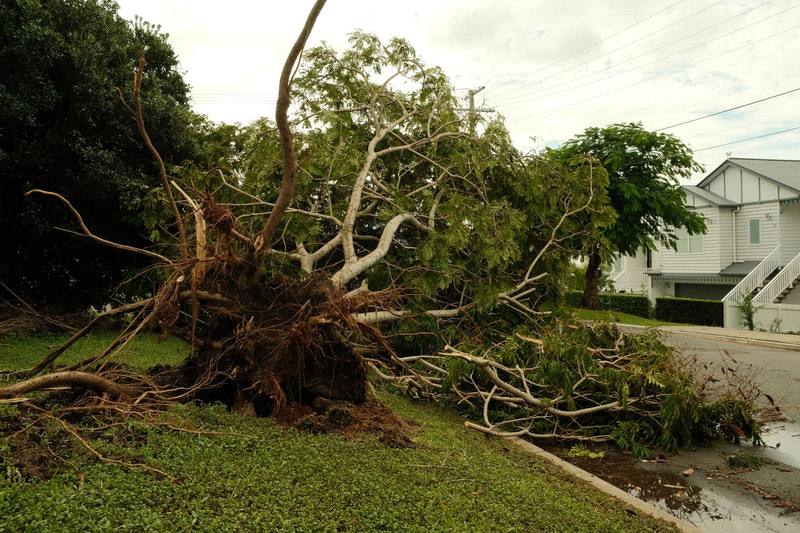
When a winter storm drops a tree or splits a limb, it usually lands on something you need: a driveway, a fence or a roof. We cut it into safe pieces, haul it away, and grind the stump if one is left behind. Call during business hours and we will come out, look at the damage and give you a quote.
What storm damage to trees usually looks like
After a winter storm in Roseville, the damage is not always a whole tree lying on the lawn. More often it is a split limb hanging in the canopy, a trunk that now leans with the soil lifted on one side, or a pile of branches across the driveway and fence. Some of it is obvious. Some of it only shows when you look closely a day or two later.
Wait until the wind has dropped and it is light out, then walk the yard. Look for these:
- Cracked or broken limbs caught in other branches above a path, roof or play area
- Soil heaved up or cracked on one side of the trunk, which often means the roots have shifted
- A lean that was not there before the storm
- Splits running down from a fork where two main stems meet
- Bark torn off in long strips, or fresh pale wood showing on the trunk
- Branches resting on a roof, gutter, fence line or service wire
Safety first, before anyone picks up a saw
Storm debris is often under tension. A limb pinned under another limb, or a trunk bent against a fence, can spring back hard when it is cut. That is the main reason we ask homeowners not to cut large pieces themselves. Raking up leaves and twigs is fine. Anything thicker than your arm, or anything still attached to the tree, is worth leaving for a crew.
If a branch is touching or near an overhead wire, stay well back and call your utility first. We do not work around live lines, and no one should. If a tree has hit the house, check for holes in the roof and water coming in, and keep people out of that room until someone has looked at it.
We do not offer after-hours service. Our hours are Monday to Friday, 7:00 AM to 7:00 PM, and Saturday, 8:00 AM to 5:00 PM. If a tree is threatening your home overnight, call emergency services or your utility first. Once the scene is safe, we can come out during our hours to clear and haul.
What usually causes storm damage in Roseville
Most of the serious damage we see around Roseville comes from wet soil and wind arriving together. Winter storms in the Sacramento Valley can bring several days of steady rain, and the clay-heavy soils common here hold water. Saturated ground loosens its grip on the roots, so a gust a tree would shrug off in August can tip it over in January.
Strong north winds are the other pattern. They often come on dry, clear days, and they find the weak points: limbs with old pruning wounds, two stems competing at one fork, and trees that were topped years ago and grew back with poorly attached shoots.
Housing stock matters too. Older neighborhoods near the historic downtown and along the creeks have large, mature trees, including valley oaks and big ornamentals, that have spent decades growing over roofs. Newer subdivisions in west Roseville tend to have younger yard and street trees planted in narrow strips, where the roots have less room to anchor. Both can fail in a storm, just in different ways.
Repair, trim or remove
Not every damaged tree needs to come down. The question we ask is whether the tree can stay standing safely and recover. A clean break on a smaller limb can usually be cut back properly to the next branch or to the trunk, and the tree will close over the wound in time.
Removal is usually the better choice when:
- A large share of the canopy is gone and the tree is left lopsided
- The main trunk is split or cracked
- The root plate has lifted and the tree now leans toward a house, driveway or a neighbor's yard
- There was rot at the break, which points to weakness elsewhere in the tree
What a storm cleanup visit involves
When you call, we ask what came down, where it landed and what it is touching. Photos help here. We then come out to look at the site, talk through what needs to happen, and give you a quote before any work starts.
On the day of the work, the crew usually:
- Takes down hanging and broken limbs from the standing tree first, so no one works under loose wood
- Cuts and sections fallen trees and large limbs
- Chips smaller branches and hauls the chips and wood away, unless you want to keep firewood or mulch
- Grinds the stump if a tree was removed and you want it gone
- Rakes and blows the area so the lawn, driveway and beds are clear
After the storm: preparing for the next one
Storm cleanup is a good time to look at the trees that did not fail. If one tree in a row lost a big limb, the trees beside it probably have a similar structure. Thinning a crowded canopy, removing dead wood and shortening long, heavy limbs over the roof all reduce how much the wind can catch next season.
Late spring through early fall is the usual window for that kind of trimming in Roseville, before the rains return. If you want us to look at the rest of the yard while we are there for the cleanup, just ask.
FAQ
Common questions about storm cleanup
No. We work Monday to Friday, 7:00 AM to 7:00 PM, and Saturday, 8:00 AM to 5:00 PM. If a tree is on a power line or threatening your home overnight, call your utility or emergency services first. We can schedule the cleanup during our hours once the scene is safe.
Yes. We take the weight off in sections from the top down, so the tree does not shift or slide while we work. We do not repair roofs or fences, so you will need a roofer or fence contractor for that part once the tree is gone.
Hauling is part of a normal cleanup, and the quote will say what is being taken away. If you would rather keep some of the wood for firewood or the chips for mulch, tell us when we come out and we will leave them where you want them.
Native oaks in Roseville are covered by city rules, and those can still apply after storm damage. Check with the City of Roseville before an oak comes down. We can describe the damage we see, but the city makes the call on permits.
Take photos of the damage first, then contact your insurer when you can. You do not have to wait to call us. We can come out, look at the site and give you a written quote you can pass along with your claim.
Get Started
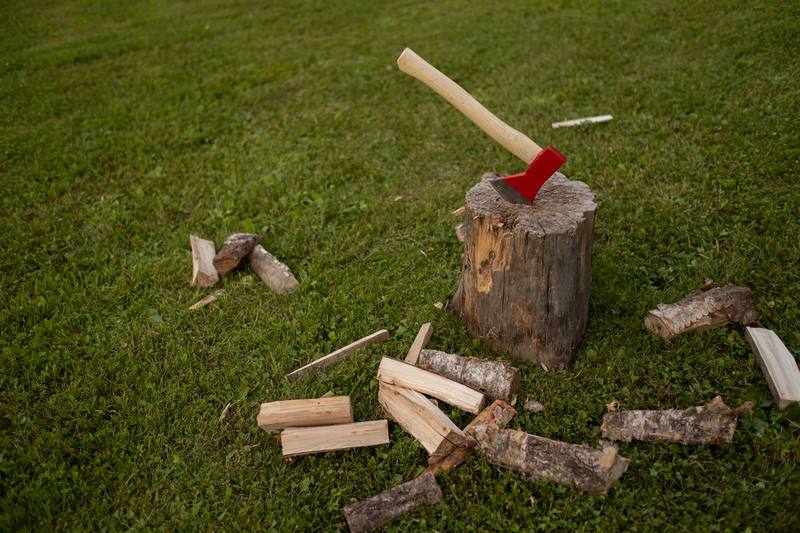
Send us a photo of the stump
Take a picture with something next to the stump for scale, tell us what you want in that spot, and we will get back to you with a quote. You can also call during business hours.