Stump Removal in Roseville, CA
We take out the stump and its main roots so the spot is ready for a patio, a slab or a new tree.
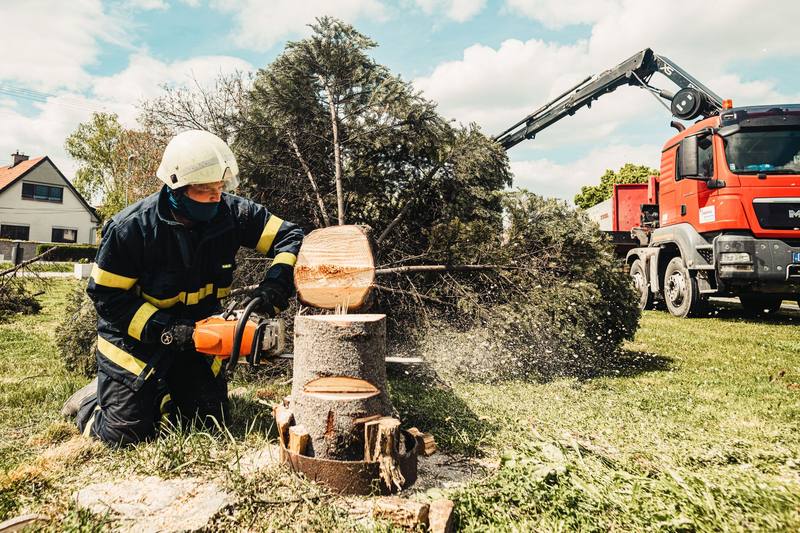
Stump removal goes further than grinding. We dig out the stump and the main root ball, backfill the hole and leave the ground level. It suits Roseville yards where something solid is going over the spot, or where an old stump keeps sending up shoots.
What stump removal means
People often use stump grinding and stump removal to mean the same thing, but they are different jobs. Grinding cuts the stump down below the soil line and leaves the roots in the ground to rot. Removal takes out the stump and the main root ball, so the hole can be backfilled and used for almost anything.
Most homeowners do not need full removal. If you plan to lay sod or plant a shrub bed over the spot, grinding is usually enough. Removal makes sense when something solid is going where the stump was: a patio slab, a shed pad, a pool, a new fence line or a wider driveway. Footings and concrete do not sit well on a mass of rotting roots, because the ground settles as the wood breaks down.
Signs a stump should come out completely
A stump on its own is rarely an emergency. In these situations we usually suggest taking the whole thing out instead of grinding it.
If none of those apply, grinding is less work, quicker and disturbs less of the yard. Once we have seen the stump, we will tell you which one we think fits.
- You are building or pouring concrete over the spot.
- The stump keeps sending up new shoots from the roots, even after it has been cut low.
- Roots near the stump are lifting a walkway, a patio edge or a section of fence.
- The stump is soft and crumbly or has mushrooms growing on it, and you want the decaying wood gone, not buried.
- You see termites, carpenter ants or beetles working in the old wood near the house.
- You want to plant a new tree close to where the old one stood.
What usually causes trouble with an old stump
Once a tree is cut, the stump and roots start to break down, but slowly. A large stump can take many years to rot away, and in that time it feeds and shelters insects and fungi. Termites like damp, decaying wood that touches soil, and a stump close to a foundation or a wooden deck gives them a place to start.
Some trees also fight back. Certain species send up suckers from the root system after the trunk is gone, so you get a ring of small shoots around the stump that comes back every spring. Cutting the shoots only encourages more. The practical way to stop it is to get out the root ball, or at least the main roots.
The third problem is settling. When a stump rots in place, the soil above and around it sinks as the wood loses volume. A lawn might show a shallow dip. A paver patio laid over it can crack or tilt.
Removal or grinding: how to decide
We look at three things: what you want to use the spot for, how big the stump and its roots are, and what is near it. A stump in the middle of an open lawn is easy to remove. A stump wedged between a fence, a side wall and an irrigation manifold is a different job. Sometimes grinding is the better choice there, because full removal would do more damage than it prevents.
Size matters too. Small and medium stumps can usually be removed whole. Large stumps with wide root plates may need to be ground down first, with the main roots cut and pulled afterwards. If a big stump cannot come out in one clean piece, we will say so.
If you are unsure, ask us to explain both options on site. A quote for removal next to a quote for grinding makes the choice easier.
What a visit involves
Underground lines have to be marked before anyone digs. Calling 811 gets the public utility lines located. That service does not cover private lines such as sprinklers, low-voltage lighting and drip tubing, so we will ask you where those run. If you are not sure, we will dig carefully around the stump and look before cutting.
On the day, the work usually goes in the order listed below.
Access matters. Gate width, slopes and the distance from where we can park to the stump all affect what equipment we can bring in. If you send a photo of the stump and the gate when you ask for a quote, it helps us plan.
- We look at the stump, the access path and anything nearby that needs protecting.
- We dig around the stump to expose the main roots.
- We cut the roots and lift or grind out the root ball, depending on its size.
- We pull out the larger loose roots we can reach.
- We backfill the hole with soil and rake the area level.
- We haul away the wood and debris, unless you want to keep the chips for mulch.
Stump removal in Roseville
Roseville summers are long, hot and dry, and by August the ground can be very hard. Dry, compacted soil makes digging slower. A stump often comes out more easily after the first good rains of the season, when the ground has softened, or after the area has been watered for a day or two beforehand. We can tell you whether that would help with yours.
Many homes in Roseville sit in subdivisions with modest back yards, block or wood fences close on every side, and irrigation running through most planting beds. That means a lot of stumps are near something we have to work around. We find the sprinkler lines and fence posts before we cut, because a broken lateral line or a leaning fence panel is a poor trade for a missing stump.
Native oaks are common in the area, and the city has rules about oak trees. If the oak has already been legally removed, the stump itself is usually straightforward. If you plan to take down a living oak first, check with the City of Roseville before anyone cuts. Oak roots tend to spread wide, so oak stumps often need more digging than their size suggests.
After the stump is gone
Fresh backfill settles over the first few weeks, especially once it is watered. Plan to top it up with a little more soil before you lay sod or pavers. If concrete or a structure is going over the spot, tell your contractor a stump was there so they can compact the base properly.
If you are replanting a tree, do not put the new one in exactly the same hole. Move it a few feet so its roots grow into undisturbed soil, not loose fill and leftover root pieces.
When you are ready, call us at (916) 010-0003 or use the Get a Stump Quote button. Tell us where the stump is, roughly how wide it is and what you plan to do with the spot.
FAQ
Common questions about stump removal
Grinding chips the stump down below the soil surface and leaves the roots to rot in place. Removal takes out the stump and the main root ball, and then the hole is backfilled. Removal suits spots where you plan to build or pour concrete.
The ground will be disturbed over a wider area than the stump itself, because we have to dig out to the roots. We backfill and level it before we leave. You will need to reseed or patch sod over that area.
Yes. Utility lines should be marked before any digging, and calling 811 gets the public lines located. Sprinkler and lighting lines are private, so tell us where they run if you know.
No. Large stumps, and stumps tucked against walls or fences, often have to be ground down first, with the main roots cut and pulled afterwards. We will tell you on site what is realistic for yours.
Yes, once the root ball is out and the hole is backfilled. Move the new tree a few feet to one side so its roots grow into undisturbed soil, not loose fill.
Get Started
Send us a photo of the stump
Take a picture with something next to the stump for scale, tell us what you want in that spot, and we will get back to you with a quote. You can also call during business hours.