Tree Removal in Roseville, CA
We take down dead, damaged or badly placed trees with care, and grind the stump if you want the spot fully cleared.
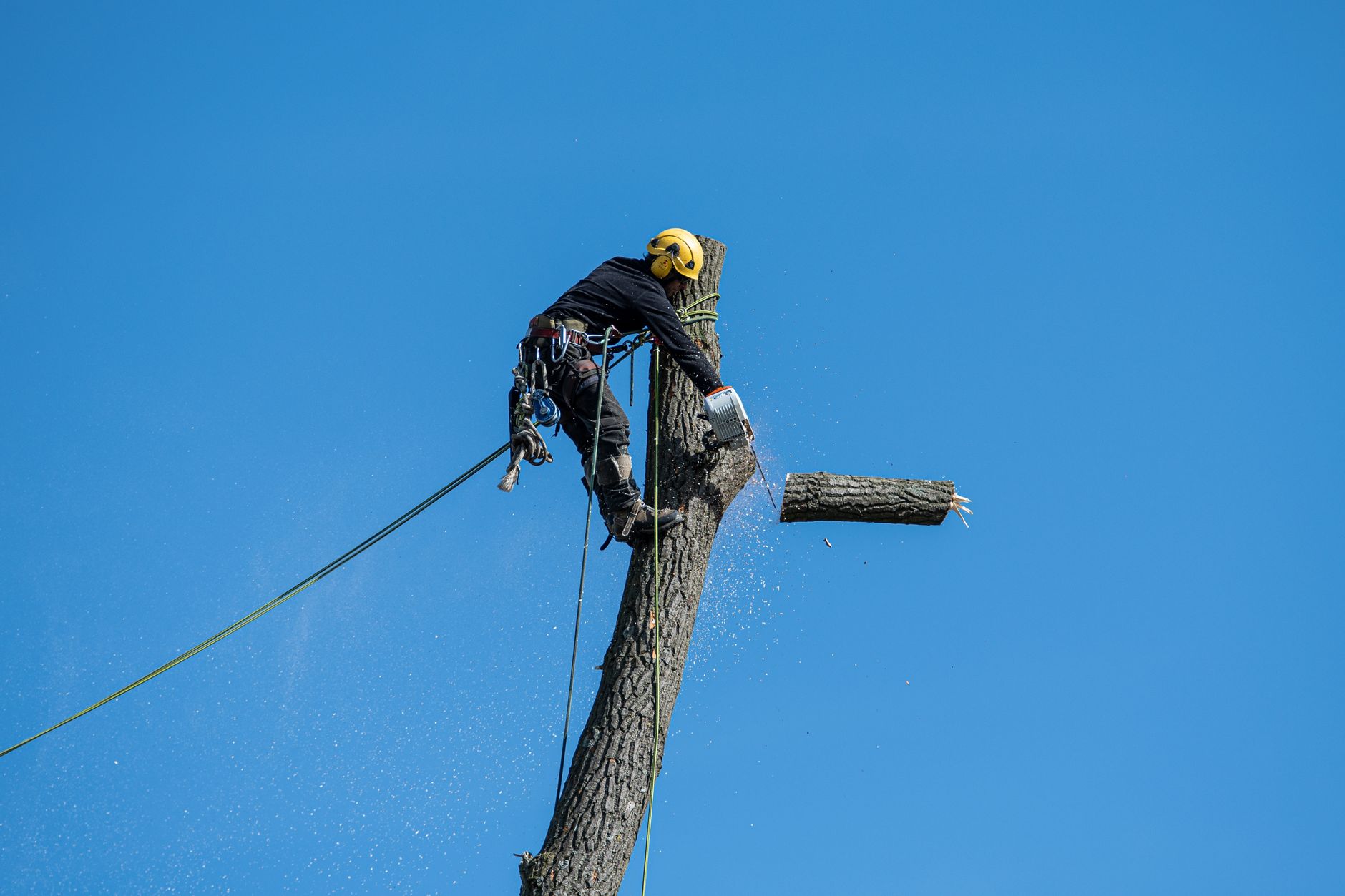
We remove trees that are dead, failing or growing in the wrong place, at homes in Roseville and the nearby towns. Every job starts with a look at the tree and what sits around it, so the method suits your yard. We can also grind the stump so nothing is left behind.
Signs a tree may need to come down
Most trees give some warning before they fail. The aim is to notice it while you still have time to plan the work, before a limb ends up on the roof. Walk slowly around the tree and look at it from the base up. These are the signs we pay most attention to:
- Deep vertical cracks or splits in the trunk, especially where two main stems meet in a tight V
- Mushrooms, shelf fungus or soft, crumbly wood at the base or on the exposed roots
- A new lean, or soil lifting and cracking on the side away from the lean
- Large dead limbs high in the canopy, or bark falling away in sheets
- Thin, sparse leaves at the top of the tree while the lower branches still look normal
- Fine sawdust or small round holes in the bark of a pine
What usually causes trees to fail around Roseville
Roseville summers are long, hot and dry, and most of the rain falls in winter. That pattern is hard on trees that were chosen for looks rather than for the climate. A thirsty tree in a lawn gets used to regular summer watering, then declines quickly when irrigation is cut back during a dry year or when the lawn is replaced with gravel.
Pines are a common example. A drought-stressed pine is an easy target for bark beetles, and once beetles are established the tree can turn from green to brown in a single season. Fast-growing shade trees planted when many local subdivisions were new, such as ash, sweetgum and some elms, have often reached a size where weak branch unions and spreading roots cause trouble near houses, fences, pool decks and driveways.
Soil plays a part as well. Much of the area sits on clay, often with a hard layer underneath, so roots spread wide and shallow instead of growing down. When winter storms soak that clay and the wind picks up, a shallow-rooted tree can tip over at the root plate even though the trunk looks perfectly sound. That is why we look at the ground around a tree as closely as the tree itself.
When to trim and when to remove
We would rather keep a healthy tree than take it down. Trimming makes sense when the problem is limited to certain branches: a limb rubbing the roof, growth reaching toward the service line to the house, or a few dead branches in an otherwise solid canopy. Thinning the crown can also reduce wind load on a tree that is basically sound.
Removal makes more sense when the trunk or root system is compromised, when a large part of the canopy has died, when the tree is pressing against a foundation or retaining wall, or when the species is simply wrong for the spot and will keep causing the same problem. A tree that needs heavy cutting every year to keep it off the house is often less work and expense over time to remove and replace with something that fits the space.
If you are unsure, ask us to look at both options. We will tell you plainly which one we think is right for your tree and explain why, including when we think trimming alone will do the job.
Oak trees and local rules
Native oaks, such as valley oaks and interior live oaks, are a big part of what gives older Roseville neighborhoods and the surrounding foothill towns their character. The city regulates work on native oaks, and removing or heavily pruning a protected oak usually requires a permit before any cutting starts.
Rules are not the same everywhere we work. Roseville, Placer County and Sacramento County each handle trees in their own way, so an oak in Granite Bay or Fair Oaks may be treated differently from one inside Roseville city limits. Before we schedule an oak removal, we will ask you to confirm with the right office what applies to your tree. Once a removal is approved, our Oak Stump Removal service covers the large, dense stumps that oaks leave behind.
What a tree removal visit involves
It starts with a look at the tree and the space around it. We note the height, the lean, what sits underneath (roof, fence, pool, garden beds, cars) and how we can get equipment in. Many Roseville backyards are narrow, with side gates and block walls on every side, so access often decides the method more than the tree does.
On the day of the work, the job usually follows these steps:
- We confirm what is coming down, what happens to the wood and debris, and whether the stump will be ground.
- We set up a work zone and keep people, pets and vehicles clear of it.
- Where a tree can be felled in one piece safely, we fell it. Where it cannot, we take it down in sections from the top, lowering heavy pieces on ropes instead of dropping them.
- Branches go through a chipper and the trunk is cut into manageable rounds.
- We rake and blow the area so you are left with a clean yard, not a scatter of twigs and sawdust.
After the tree is down
Removing a tree leaves a stump unless you ask for it to be ground. A stump left in place can send up new shoots, attract insects and get in the way of mowing, paving or replanting. Grinding takes it down below the soil surface and turns it into chips you can spread as mulch or have hauled away. Surface roots running across the lawn can be ground at the same time.
If you plan to plant a new tree, set it back from the old spot and choose a species that suits the space at its full size. A drought-tolerant, slower-growing tree will usually do better in our summers than a fast shade tree that needs constant water. We are happy to talk through the site with you, and you can get one quote that covers both the removal and the stump.
FAQ
Common questions about tree removal
It depends on the tree. Native oaks are regulated by the city, and removing a protected oak usually needs a permit first. Other trees on private property are often not regulated, but rules differ between Roseville and the unincorporated county areas, so check with the city or county before work starts.
Usually, yes. When a truck cannot reach the tree, we take it down in sections using ropes and carry the pieces out through the side gate. It takes longer than an open-access job, and we will explain the plan when we look at the tree.
Only if you ask for it. Tree removal takes the tree down to a low stump. We can grind the stump below the soil line as part of the same job, which is usually simpler than scheduling it separately later.
Not necessarily. A tree that has grown with a gradual lean for many years is often stable. A lean that is new or getting worse, especially with cracked or lifted soil on the opposite side, is a warning sign and should be looked at soon.
We do not offer after-hours emergency service. During our regular hours we handle storm-damaged trees through our Storm Cleanup service and do our best to fit in trees that pose a real hazard. If a tree is on a power line, call the utility first.
We chip the branches and cut the trunk into rounds. You can keep the chips or the wood if you want them, otherwise we haul the debris away. Let us know your preference when we quote the job.
Get Started
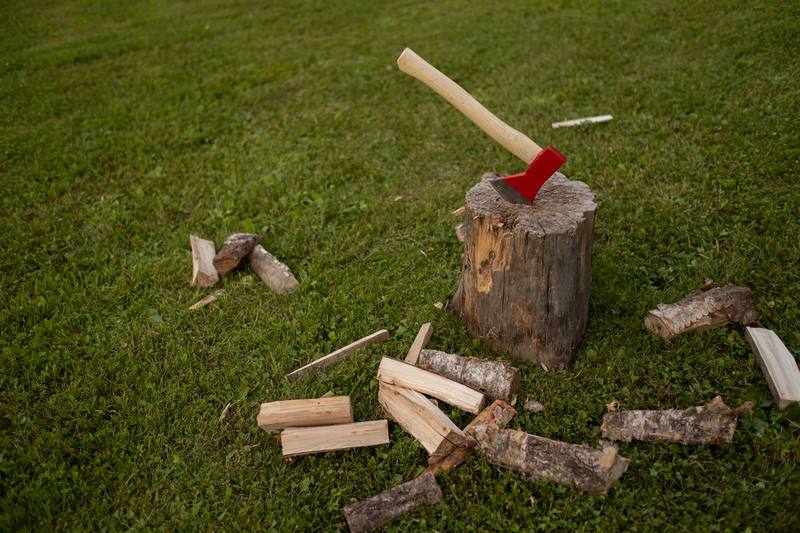
Send us a photo of the stump
Take a picture with something next to the stump for scale, tell us what you want in that spot, and we will get back to you with a quote. You can also call during business hours.