Tree Service in Rocklin, CA
We remove and prune trees across Rocklin and clear storm damage after winter rain, working around the town's granite ground and native oaks.
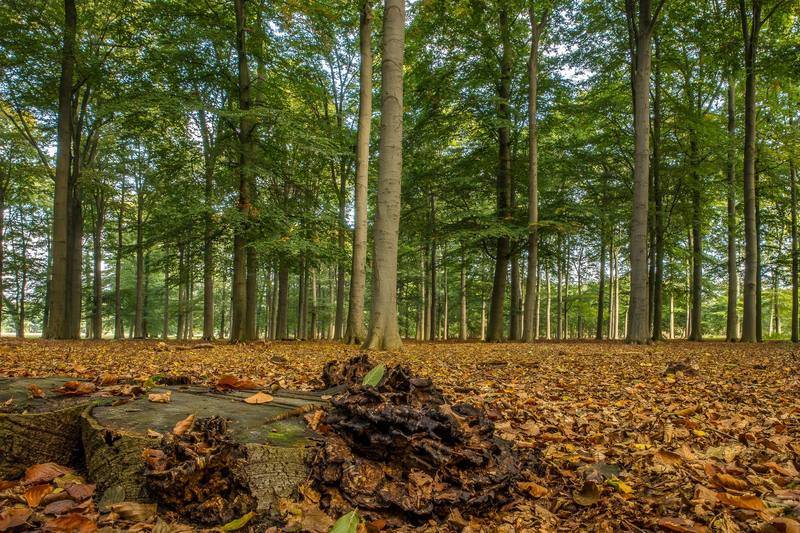
A tree service in Rocklin handles four kinds of work: tree removal, trimming and pruning, storm cleanup after winter wind and rain, and stump grinding once a tree is down. We serve Rocklin from Roseville, about 3 miles away. Rocklin's granite and its hot, mostly rainless summers shape how most of those jobs go.
Tree removal in Rocklin
Most tree removal in Rocklin starts with one of two trees: one that has died after a run of hot, dry summers, or one that has started to lean after a wet winter. Next to a house, the method decides the job more than the saw does.
Sectional takedown where there is no room to fell
Felling a tree whole needs a clear strip of ground at least as long as the tree is tall, and a fenced backyard rarely has one. A sectional takedown takes the tree apart from the top down instead. A climber or a bucket lift cuts the crown and then the trunk into short lengths, and each piece drops onto open ground or comes down on a rope. It is the normal way to take down a big tree that stands over a roof.
Rigging and the chipper
Rigging is the rope system that lowers heavy wood under control. The rope runs through a block tied off high in the tree, and a ground worker lets each piece down with a friction device wrapped around the base of the trunk. Brush goes straight into a chipper, which reduces limbs to wood chips. Ask whether the chips leave with the crew or stay behind as mulch.
Dead trees and storm damage
Dead wood dries out and turns brittle, so a climber cannot trust a dead limb to hold a rope, and a lift often does that work instead. Storm damage brings its own hazards: a split trunk or a limb hung up in the canopy can shift as weight comes off it, so the crew cuts it in small pieces and keeps everyone clear of the drop zone. A limb lying on a power line belongs to the utility first, and nobody should touch it until the line is made safe.
What to ask a tree company before a removal
Ask any tree company how it plans to bring the tree down and where each piece will land, and get that answer in the written quote. A quote worth signing also says whether the stump and the haul-away are included. Ask for proof of liability insurance as well, because damage from a dropped limb should fall on the contractor's policy and not on yours.
Trimming and pruning Rocklin trees
Mature shade trees in Rocklin need tree pruning every few years, and a valley oak is easiest to read in winter, when its leaves are down and every limb shows. Trimming is the routine side of tree service, and pruning on schedule often saves a tree from removal later. Clearing limbs off a roof or out of a gutter line is ordinary tree care too.
Crown thinning and deadwood
Crown thinning removes selected limbs from inside the canopy so wind passes through the tree instead of pushing on it like a sail. Each cut goes back to a fork or to the trunk, because a tree topped or cut too hard answers with a thicket of weak, fast sprouts. Taking out deadwood is the other half of the job, since dead limbs over a roof or a driveway are the first to come down in a winter storm.
Timing cuts around the summer heat
Heavy pruning belongs in the cool, wet months, not in July, when Rocklin's average high is 94 °F and rain is rare. A tree opened up in that heat loses the shade over its own bark and has to push new growth while it is short of water. Light work, such as lifting a branch over the sidewalk, is fine in any season.
When to prune citrus in California
In California, citrus is pruned in late winter or early spring, once frost is past and the main crop is in. It needs far less cutting than a shade tree: just the suckers from below the graft and whatever wood is dead or crossing. Keep the leafy outer canopy in place through the summer, because citrus bark sunburns when it is suddenly exposed.
Rocklin soil, roots and wind-thrown trees
The USDA soil survey maps three units around Rocklin: Xerofluvents, which are somewhat poorly drained and in hydrologic group B; Xerorthents, which are well drained; and the Alamo variant, which is somewhat poorly drained and in hydrologic group D. Of the three, only the Alamo variant traces to a named USDA soil series. Xerofluvents and Xerorthents are broader classes for young soils, laid down by streams in the first case and showing little layering in the second.
Group D ground and the restrictive layer
Hydrologic group D soils take in water very slowly, usually because clay or a dense layer lies close to the surface. That layer is the restrictive layer: roots cannot push down through it, so they spread sideways in the soil above. Rocklin is granite country as well, since the rock was quarried along Secret Ravine, and where granite sits under a yard it stops roots and a stump grinder alike. A tree on either kind of ground can grow a wide, shallow root plate and still look healthy in August.
Why trees blow over after winter rain
Trees in Rocklin usually go over during the cool, wet winters, when soaked soil holds roots far less firmly than dry soil does. A gust then levers the whole root plate out of the ground, often lifting a slab of lawn with it, and arborists call this windthrow. Somewhat poorly drained ground, which describes two of the three map units here, stays wet longest after a storm. A tree that starts to lean, or shows cracked or heaved soil on one side, needs a look before the next storm arrives.
How far an oak should be from a house
Give a new oak at least 20 to 30 feet from the house, and a valley oak more, since its crown can end up as wide as the tree is tall. An oak that already stands closer can usually stay if it is healthy and its roots were not cut for a foundation or a patio. Heavy machines and trenching belong outside the drip line, and summer sprinklers belong away from the trunk, because wet soil at the base of a native oak invites oak root fungus.
When to call an arborist in Rocklin
An arborist answers a different question from a tree crew: should this tree stay? A dead tree or a limb on the roof is a simpler tree service call in Rocklin and needs no assessment. A large oak with a problem does need one, and an arborist assessment looks at its health and structure before anyone talks about cutting.
If a written report is needed before an oak comes out or before a builder works near its roots, ask whether the person signing it is an ISA-certified arborist, and ask us the same question. Not every crew that offers tree services can supply that report, and a good one says so up front.
These signs call for an assessment before anyone quotes a cut:
- Conks or mushrooms at the base of the trunk, a sign of decay in the wood or the roots.
- A valley oak that browns or drops leaves in midsummer while the oaks nearby stay green.
- A crack or cavity in the main trunk, or a split where two trunks meet.
- Roots cut in recent years for a pool or a new driveway.
Stump grinding after the tree comes down
Each removal leaves a stump behind. A stump grinder's cutting wheel takes it down 6 to 12 inches below grade, which is deep enough for sod or a new shrub, and turns the wood into a mound of chips mixed with soil. Those grindings are either raked back into the hole or hauled off and replaced with topsoil.
Rocklin's ground changes how the hole behaves afterwards. On well-drained Xerorthents a chip-filled hole dries out and sinks slowly as the wood rots, so a little extra soil on top keeps it level. On the somewhat poorly drained ground the chips hold water through winter, and swapping them for topsoil gives grass a better start. Where oak root fungus killed the old tree, the larger surface roots should be ground out too, since the fungus lives on in infected roots and can reach the next planting.
One visit for the tree and the stump means the lawn only takes the machines once, so check that a tree service quote includes the grinding. Stump work is most of what we do, and stump grinding in Rocklin has its own page on oak stumps and backfill.
Nearby towns for tree service
Near Rocklin we also work in Loomis, Granite Bay and Penryn, with the same tree care services in each. Tree rules can change at those boundaries, since a city and the county may each set their own, so check which office covers the address before an oak comes down.
Local details for Rocklin
- ZIP codes: 95677, 95765
- Distance: About 3 miles away in a straight line
- Main soils (USDA soil survey): Xerofluvents (somewhat poorly drained, hydrologic group B); Xerorthents (well drained); Alamo variant (somewhat poorly drained, hydrologic group D)
- Nearby: Loomis, Granite Bay, Penryn
About Rocklin: Rocklin, CA on Wikipedia · Rocklin on Google Maps
FAQ
Tree Service questions from Rocklin
Tree work in Rocklin is priced job by job, because the cost follows the size of the tree and how hard it is to get the wood safely to the ground. A small dead tree in an open front yard is a short job. A big oak leaning over a roof means a sectional takedown with every piece rigged and lowered, and wood carried out by hand through a side gate takes longer than wood loaded at the curb. We price each job after seeing the tree.
Late fall and winter, in the dry spells between storms, are usually the least expensive time for planned tree removal in Rocklin. A valley oak has dropped its leaves by then, so there is less to chip and haul, and a removal booked ahead costs less than an emergency call after a storm. A dead tree or one leaning toward the house should not wait for a cheaper month.
Oak trees in Rocklin can be protected, and the City of Rocklin decides whether a given oak is covered, not the tree company. Ask the city about the specific tree before anyone cuts, and keep the answer in writing. Ask as well whether the rule reaches heavy pruning or digging inside the root zone, since a crew needs to know that before it starts on a large oak.
Services
Services in Rocklin, CA

Get a quote
Request a tree service visit in Rocklin
Send a photo of the stump with a tape measure across it and say what you want in the spot afterwards. We reply with a quote and any questions about the gate or the ground. Call or text (279) 529-0050 or email info@stumpgrindingroseville.com.