Tree Service in Granite Bay, CA
We take down and prune trees across Granite Bay and clean up after winter storms, with the town's oaks and rocky ground in mind.
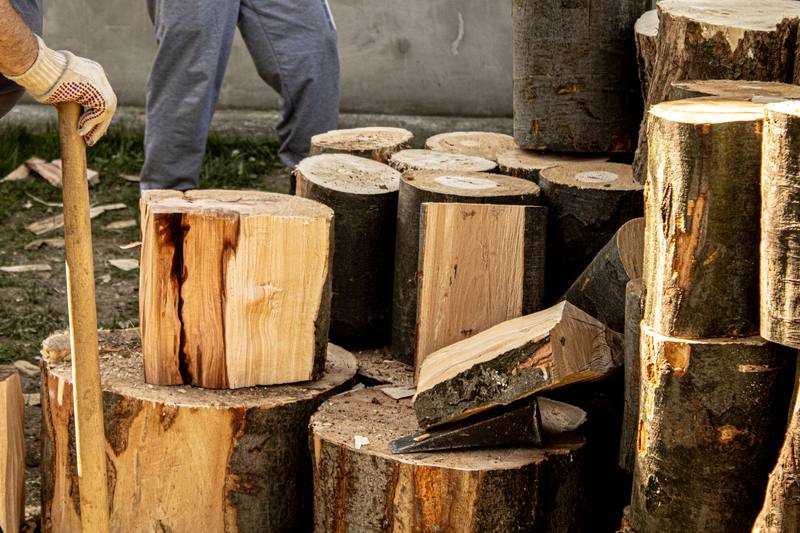
A tree service in Granite Bay spends most of its time on four jobs: tree removal, trimming and pruning, storm cleanup after winter wind and rain, and stump grinding once a tree is down. Our base is in Roseville, about 3.4 miles away. Much of the work here is shaped by the native oaks and by the hard granodiorite the whole town sits on.
Tree removal in Granite Bay
In Granite Bay, tree removal usually starts with a tree that has died or one that has begun leaning toward the house after a wet winter. Beside a roof, how the tree is taken apart matters more than the cutting.
Sectional takedown beside a house
When there is no landing zone long enough to drop a tree whole, a sectional takedown takes it apart from the crown down. Working from a climbing line or a bucket lift, the crew cuts short sections that either fall into a cleared patch of lawn or are lowered on a rope. Any large oak standing within its own height of a roof is usually removed this way.
Rigging and the chipper
With rigging, heavy wood is tied off before each cut and lowered on a line instead of dropped. The line passes through a block high in the tree, and a ground worker feeds it out through a friction device at the base. Brush is fed into a chipper as it comes down, and the chips can be hauled away or left for you as mulch.
Dead trees and storm damage
Years of hot, dry summers wear a tree down, and once it dies the wood dries out and turns brittle. Dead limbs are too weak to tie a rope to, so the cutting is often done from a lift. A storm-split trunk is dangerous in another way, because the wood is still loaded and can jump when a cut releases it, so it is taken apart in small pieces with nobody standing in the drop zone.
What to ask a tree company before a removal
Before a removal, get the plan in writing: how the tree comes down, where the pieces land, and whether the stump and the cleanup are in the price. Proof of liability insurance belongs in the same file. If it is an oak, find out whether anyone has asked the county about its tree rules.
Trimming and pruning Granite Bay trees
How often a mature tree in Granite Bay needs a trim depends on the tree and what it hangs over, and many oaks are pruned in winter, when a valley oak has dropped its leaves and every limb is easy to see. Good tree pruning takes out the wood most likely to fail. Kept up, that kind of tree service can keep a tree from ever having to come out.
Crown thinning and deadwood on oaks
On a Granite Bay oak, crown thinning means taking out a few inner limbs so the wind can pass through, while most of the canopy stays. Every cut goes back to a fork or the trunk; cut an oak too hard and it answers with a thicket of weak sprouts. The deadwood comes out at the same time, starting with whatever hangs over the roof or the driveway.
Pruning backyard citrus
A backyard orange or lemon in Granite Bay is best cut back once frost is no longer a risk and the main crop has been picked, which usually means late winter or early spring. It needs much less work than an oak: the suckers below the graft and any dead or crossing wood. The leafy outer canopy stays on through the hot, dry summer to keep the bark from sunburning.
Limbs over roofs and power lines
A limb lying on the roof wears the shingles a little more with every gust, and an overhanging branch fills the gutters with leaves by the first winter rain. Cutting those back is ordinary tree care. Near a power line it stops being ordinary: that call goes to the utility before anyone cuts.
Granite Bay soil, roots and wind-thrown trees
The USDA soil survey maps the ground around Granite Bay as the Andregg series, a well-drained soil in hydrologic group B. Group B soils take in rain at a moderate rate, so water seldom stands around a trunk for long. Beneath that soil lies granodiorite of the Penryn Pluton, hard rock that roots and machines both run into.
Andregg soil and the rock below it
The granodiorite is the restrictive layer: roots cannot push through solid rock, so they follow cracks where they find them and spread sideways where they do not. Many trees here grow a wide, flat root plate instead of deep anchoring roots, even though the soil drains well. That is why a tree that looks healthy in August can still go over in a January storm.
Why trees blow over after winter rain
Cool, wet winters soak the soil above the rock, and wet soil grips roots far less firmly than dry. In a strong gust the whole root plate can tip out of the ground, which arborists call windthrow. Watch for a new lean, or soil that has cracked or risen on one side after a storm; either one means the tree should be checked before the next blow.
How far an oak should be from a house
Plant a large oak at least 20 to 30 feet from a house, and give a valley oak the far end of that range or more, since its crown can spread as wide as the tree is tall. An oak already closer does not have to come out: what decides it is the tree's health and whether its roots have been cut for a foundation or a patio. Keep trenching and heavy machines outside the drip line, and keep lawn sprinklers away from the trunk, because summer water around a native oak's root crown invites oak root fungus.
When to call an arborist in Granite Bay
Bring in an arborist when you need to know whether a tree should stay. Most tree service calls here are plain ones, such as a dead tree or a limb on the roof, and need no assessment. A big oak with a problem does, and an arborist checks its health and structure first.
A written report is sometimes needed before an oak comes out or before a builder digs near its roots. Check that the person signing it is an ISA-certified arborist, whichever company sends them, ours included; a crew offering tree services that cannot supply one should tell you before the visit.
Any one of these is reason enough for an assessment first:
- Fungus on the trunk or root flare, shelf-shaped or mushroom-like, which means the wood is decaying inside.
- An oak going thin or brown in midsummer when its neighbors are still green.
- A cavity you can see into, or a deep crack, in the main trunk.
- A driveway or pool put in across the roots within the last few years.
Stump grinding after the tree comes down
Grinding takes what is left of the trunk 6 to 12 inches below grade, enough depth to lay sod or plant a shrub over the spot. The stump grinder leaves a mound of chips and soil, which can be raked back into the hole or hauled off and swapped for topsoil.
On well-drained Andregg soil a chip-filled hole does not stay soggy, but it sinks as the wood rots, so a little extra soil on top keeps it level. Where the granodiorite sits close to the surface, the grinder stops at the rock. Ask for the bigger surface roots to be ground out as well if the oak died of oak root fungus; infected roots left in the soil can infect whatever is planted next.
If the stump is ground the day the tree comes down, nothing heavy has to cross the yard a second time; a good tree service quote says whether that is included. Our own work is mostly stumps, and the stump grinding in Granite Bay page goes into oak stumps and backfill.
Nearby towns for tree service
Rocklin, Loomis and Folsom are close by, and we offer the same tree care services there. Their oak rules are not all the same, so ask the office that covers the address before any oak comes down.
Local details for Granite Bay
- ZIP codes: 95746, 95661
- Distance: About 3.4 miles away in a straight line
- Main soils (USDA soil survey): Andregg (well drained, hydrologic group B)
- Nearby: Rocklin, Loomis, Folsom
About Granite Bay: Granite Bay, CA on Wikipedia · Granite Bay on Google Maps
FAQ
Tree Service questions from Granite Bay
Granite Bay tree work is priced per job: a bigger tree, or one that is harder to get down without damage, costs more. A dead tree in an open front yard is a short job, while a large oak over a roof means a sectional takedown with every piece rigged and lowered. Access counts too, because carrying wood out through a side gate takes longer than loading it at the street. We put a price on it after seeing the tree.
In Granite Bay a removal planned for a dry spell in late fall or winter usually costs less than one done in a hurry after a storm. With its leaves off, a valley oak leaves less to chip and haul. Size and access still decide most of the price, and a dead tree, or one leaning toward the house, should come down now rather than in a cheaper month.
Granite Bay oaks can be protected, and it is the county, not a tree company, that decides whether a given oak is covered. Ask the county planning office about your tree before anyone cuts and keep the reply, along with whether heavy pruning needs approval too.
Services
Services in Granite Bay, CA

Get a quote
Request a tree service visit in Granite Bay
Send a photo of the stump with a tape measure across it and say what you want in the spot afterwards. We reply with a quote and any questions about the gate or the ground. Call or text (279) 529-0050 or email info@stumpgrindingroseville.com.