Tree Service in Folsom, CA
We remove and trim trees across Folsom and grind out the stumps they leave, with the city's tree rules and the fast-draining local soil in mind.
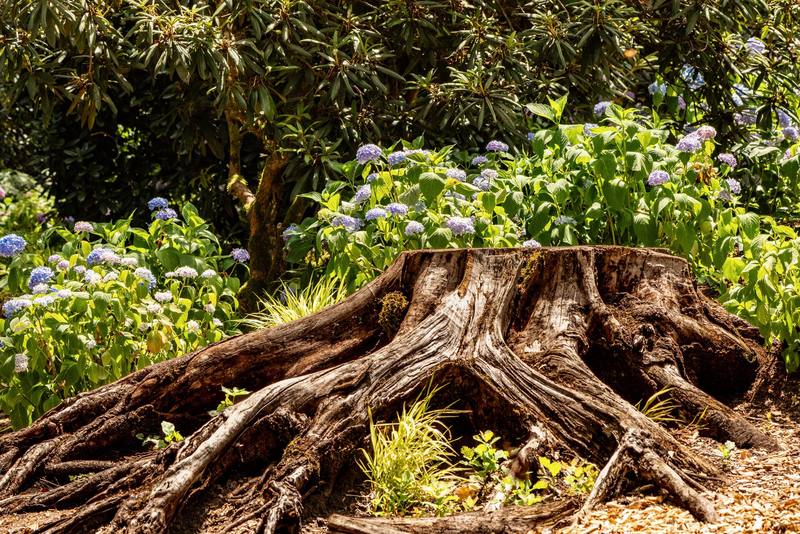
Most calls to a tree service in Folsom are for one of four jobs: tree removal, trimming and pruning, storm cleanup, or grinding out the stump a removal leaves behind. We serve Folsom from Roseville, about 6 miles away. The work here follows the weather, with long, hot, dry summers that stress trees and cool, rainy winters that bring the storms that break them.
Tree removal in Folsom
Tree removal in Folsom splits along the age of the neighborhood. Around the historic downtown district the houses are older, and many of the trees beside them are big and close to roofs and service wires. In the new construction south of Highway 50, where the Folsom Plan Area covers 3,250 acres, removals are more often young trees that never rooted into graded ground, or older oaks whose roots were cut when the lots went in. Our tree removal page covers the method in general. Here, a tree service spends more of the day on ropes than on the saw, because there is rarely room to drop a tree whole.
Dead trees after a long, dry summer
Most trees that die here decline over several summers of heat and little water, then fail quickly at the end. When the bare wood has spread past the top of the crown and the bark is lifting from the trunk, removal is usually the honest call.
Sectional takedown on a tight lot
A sectional takedown brings a tree down from the top in pieces short enough to control, because felling it whole needs open ground as long as the tree is tall. On most Folsom lots that ground is not there, since a fence or the neighbor's roof sits inside the fall zone. The climber clears the limbs first and then cuts the trunk in rounds working downward, while the chipper at the street turns each load of branches into chips.
Rigging over roofs and service wires
Rigging is the rope system that lowers each cut piece instead of letting it fall. A pulley block tied off higher in the tree carries the rope, and a ground worker at the base of the trunk lowers the piece slowly through a friction device. If branches touch the wires to the house, call the utility before a crew climbs.
Storm damage and hanging limbs
Storm damage in Folsom mostly arrives in winter, when a soaked crown and gusting wind break limbs that held all summer. A broken limb caught up in the canopy, which crews call a hanger, can let go hours or days later. Keep people and cars clear of it until it has been roped down.
Trimming and pruning Folsom trees
Winter is the easiest season for tree trimming on most of Folsom's deciduous shade trees, because bare branches show every crossing limb and weak fork. Good tree pruning takes whole branches back to a fork or to the trunk instead of shearing the ends, and it starts with whatever is dead or rubbing. Between storms, this is most of what a tree service does in Folsom. On the young trees in the newer neighborhoods, a few years of regular tree care sets one strong central leader and saves a heavy correction once the tree is big.
Deadwood and summer branch drop
Deadwood is the dead branches inside a crown. Shaded inner twigs die off on every tree, and a hot summer with little rain adds to it. A dead limb over a roof or a driveway is the first thing worth paying to remove. Large trees can also shed healthy-looking limbs on hot, still afternoons, which arborists call summer branch drop.
Crown thinning a valley oak
Crown thinning removes selected live branches across the canopy so wind passes through instead of loading the tree like a sail. A valley oak, the largest of California's native oaks, takes it only in light doses, since heavy cuts stress an oak and leave wounds that decay. Stripping out the inner limbs, known as lion-tailing, pushes weight to the tips and makes a break more likely.
When to prune citrus trees
Prune citrus trees in California in late winter or early spring, after the last frost and before the new spring growth starts. Citrus needs only light cutting: take out dead wood and the suckers that sprout below the graft, and keep the low canopy that shades the trunk. Bark that heavy pruning exposes can sunburn in a Folsom summer.
Folsom soil, roots and wind-thrown trees
The soils mapped around Folsom all drain well or faster, and that shapes both how trees root here and how they fail. The USDA soil survey shows four map units near the town: Xerolls, well drained; Xerorthents, somewhat excessively drained and in hydrologic group A; Andregg, well drained and in hydrologic group B; and Americanos, also well drained and in hydrologic group B. Andregg and Americanos are each a named USDA soil series, while Xerolls and Xerorthents are broader groupings that take in several soils.
Fast-draining ground and summer drought
Xerorthents, in hydrologic group A, take in rain fastest and hold the least of it into summer. Trees on that ground show drought stress first, with thin tops and early leaf drop. Xerolls carry a darker, richer topsoil, and the two group B series take in water at a moderate rate, so trees on them handle a dry spell better.
Restrictive layers and shallow roots
A restrictive layer is anything below the topsoil that roots cannot get through, such as dense hardpan or weathered rock. The official description for each USDA soil series gives the depth to that layer, and on foothill ground it can sit closer to the surface than good drainage suggests. A tree that cannot root downward spreads its roots out in a flat plate, which holds it through summer and can let go in a winter storm.
Why Folsom trees tip over in winter
Trees here blow over mostly in the wet months, when water has softened the ground around the root plate and a storm pushes on a full crown. Check the base after a storm: a crack in the soil, or roots lifting on the side away from the lean, means the tree has started to move. Roots cut by trenching for a pool or a utility line set up the same failure, often years after the digging.
How far an oak should be from a house
An oak should stand 20 to 30 feet from a house, and a valley oak needs more room still, because its crown can spread as wide as the tree is tall. Closer than that, limbs hang over the roof and roots run under paving, where later digging cuts them. For an oak that already stands close, crown work and keeping construction off its root zone usually serve it better than removal.
When to call an arborist in Folsom
Call an arborist in Folsom when the question is whether a tree can be kept, not how to take it down. An ISA-certified arborist has passed the International Society of Arboriculture's certification exam, and that is the person to judge internal decay or a lean that is getting worse. Our arborist page explains what an assessment covers. Not every company selling tree services has one, so ask any of them, ours included, whether the person assessing your tree holds the credential.
Any of these signs is worth an assessment before anyone quotes a cut:
- Mushrooms or shelf fungi on the trunk or root flare, a sign of decay inside.
- A crack in the main trunk, or a split opening where two large limbs join.
- A lean that has appeared or grown since last year, with soil heaved up on the opposite side.
- Trenching or new paving inside the drip line in the past few years.
What to check before hiring a tree company
Before you hire a tree company in Folsom, ask for proof of current liability and workers' compensation insurance, and get a written quote that lists the haul-away and the stump as separate lines. Ask how the crew will rig the limbs over your roof; a tree service that cannot say where each piece will land has not planned the job.
Stump grinding after the tree comes down
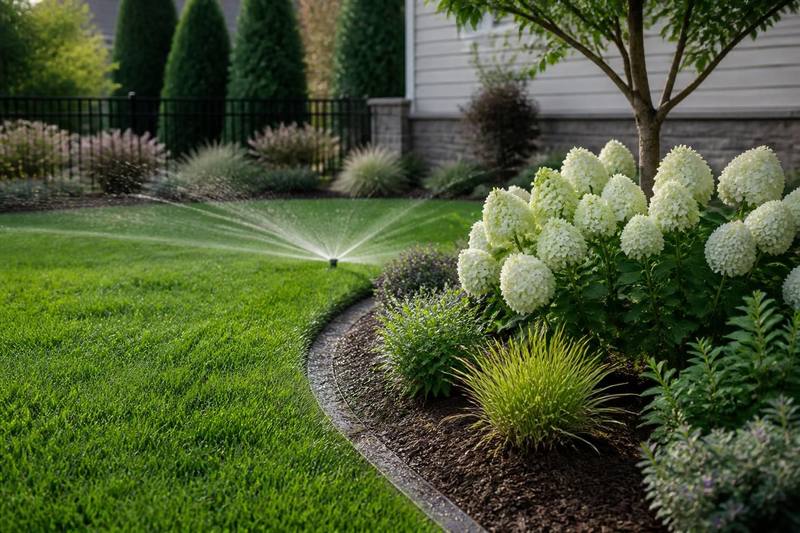
Every removal leaves a stump, and a stump grinder cuts it 6 to 12 inches below grade, turning the wood into chips mixed with soil. The grindings settle as they rot, so under a lawn most should be raked out and the hole backfilled with topsoil, while in a planting bed they can stay as mulch. Sprinkler lines and valve boxes near the stump need flagging first, since the grinder's wheel cuts anything in its path.
Doing the grinding on the same visit as the removal saves bringing equipment across the yard twice, so ask whether a tree service quote includes the stump. Stumps are our main trade, and the page on stump grinding in Folsom covers root grinding and hole backfill in more depth.
Nearby towns for tree service
El Dorado Hills borders Folsom on the east, and we work there and in Orangevale and Fair Oaks with the same tree care services. Tree rules change at each city or county line, so ask the office that covers the address before an oak comes down.
Local details for Folsom
- ZIP codes: 95630, 95671, 95763
- Distance: About 6 miles away in a straight line
- Main soils (USDA soil survey): Xerolls (well drained); Xerorthents (somewhat excessively drained, hydrologic group A); Andregg (well drained, hydrologic group B); Americanos (well drained, hydrologic group B)
- Nearby: Orangevale, Fair Oaks, El Dorado Hills
About Folsom: Folsom, CA on Wikipedia · Folsom on Google Maps
FAQ
Tree Service questions from Folsom
Tree work in Folsom is priced job by job after someone has seen the tree, because the cost depends on the size of the tree and on what sits underneath it. A tree in an open yard that can be felled in one piece is a short job. A tall tree over a roof, where every limb has to be rigged down and carried out by hand, takes much longer. Compare quotes that list the haul-away and the stump separately, so you are pricing the same work.
A removal planned for late fall or winter usually costs less in Folsom than one done in a rush, because a bare deciduous tree leaves less brush to chip and nothing about the job is hurried. Folsom's winters are cool and rainy, so a job on a soft lawn may wait for a dry stretch to keep equipment from rutting the yard. A dead or split tree should come down when the problem is found, not when the calendar suits.
Oak protection in Folsom is set by the City of Folsom, so ask the city whether your oak needs a permit before anyone cuts it. If the property sits outside city limits, the county sets the rule instead. Keep the answer with your records, and expect a careful crew to ask about it before the first cut.
Services
Services in Folsom, CA


Get a quote
Request a tree service visit in Folsom
Send a photo of the stump with a tape measure across it and say what you want in the spot afterwards. We reply with a quote and any questions about the gate or the ground. Call or text (279) 529-0050 or email info@stumpgrindingroseville.com.