Tree Service in Fair Oaks, CA
Tree removal, trimming and stump grinding across Fair Oaks, with the county's tree rules and the local soil in mind.
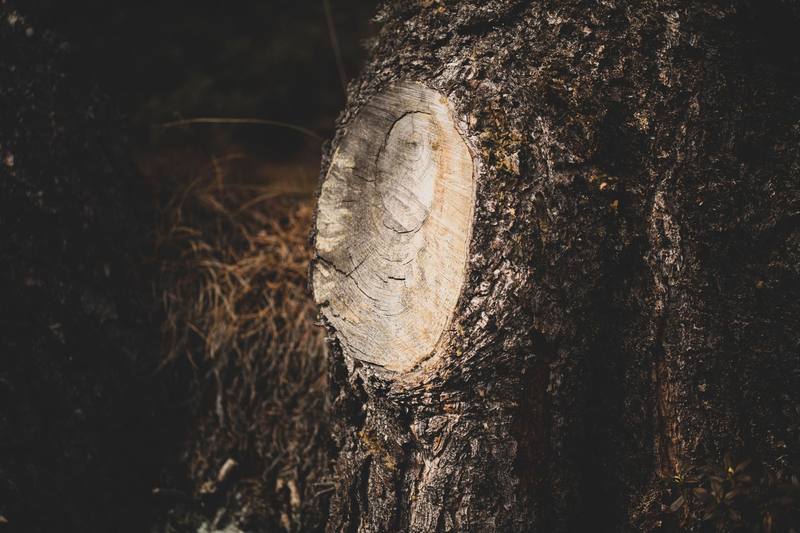
We handle four kinds of tree service in Fair Oaks: tree removal, trimming and pruning, storm cleanup, and grinding out the stumps that removals leave behind. We work out of Roseville, about 7.2 miles away. The work here is shaped by the tree canopies over the town's rolling streets and by hot, dry summers on fast-draining ground.
Tree removal in Fair Oaks
Most tree removal calls in Fair Oaks come down to two causes: a tree that has died, or a tree that has grown out over the house. Fair Oaks is a town of rolling streets under canopies of trees, with pockets of custom homes, so a tall tree nearly always has a roof or a neighbor's fence within reach. A tree service working here spends more time planning where each piece will land than running the saw. The general method is on our tree removal page.
Sectional takedown over roofs and fences
In a sectional takedown the climber starts at the top, since there is no open ground long enough to drop the tree whole, and works down: limbs first, then the trunk in pieces small enough to control. On a lot with a pool or a shed under the canopy, nearly every large removal goes this way.
Rigging limbs down on a line
Each piece cut over a roof is tied to a line that runs through a block higher in the tree, and a ground worker at the base brakes it down with a friction device instead of letting it fall. Ask any crew how it plans to rig the limbs that hang over your roof, and where each piece will be set down.
Storm damage in a wet winter
Most storm damage in Fair Oaks comes in the damp to wet winters, when the ground is soaked and rain and wind arrive together. Afterward, look up before you walk under the tree: a broken limb hung in the canopy, called a hanger, can drop without warning, so keep people and cars away until a crew has roped it down.
Chipping the brush on site
At the street, a chipper turns the branches into wood chips, so the brush from a big tree takes up a fraction of the space. If you would rather keep the chips as mulch for shrub beds, say so before the job starts.
Trimming and pruning Fair Oaks trees
Winter is the easiest time to prune most Fair Oaks shade trees, because the deciduous ones have dropped their leaves and the shape of the crown is plain to see. Tree pruning done well removes the dead and rubbing wood first, then cuts whole branches back to a fork or the trunk rather than shearing the tips. Kept up, that tree care keeps limbs off the roof and weak wood out of the crown.
Deadwood after a hot, dry summer
Trees on Fair Oaks' fast-draining ground run short of water by late summer, and the dead branches that follow turn brittle and are what the first winter wind brings down. Cutting that deadwood out over a roof, a driveway or a play area comes before any shaping on a large tree.
Crown thinning a valley oak
Thinning a valley oak, the big native oak of the Central Valley, should be light: a few live branches come out from inside the canopy so wind can pass through instead of pushing on the tree, and most of the leaves stay. Heavy pruning stresses an oak and opens it to decay. Stripping the inner limbs and leaving tufts at the ends, called lion-tailing, moves the weight outward and makes a break more likely.
When to prune citrus trees
The right window for citrus in California is late winter or early spring, after frost danger has passed and before the spring flush. A lemon or orange tree needs far less cutting than a shade tree: the dead wood and the suckers from below the graft come off, and the leafy skirt that shades the trunk stays. Strip that skirt off and the bark can sunburn in a Fair Oaks summer.
Fair Oaks soil, roots and wind-thrown trees
Every soil mapped around Fair Oaks drains well or faster. The USDA soil survey lists four there: Xerofluvents and Xerorthents, both somewhat excessively drained, and Xerolls and Americanos, both well drained. Americanos is the one named USDA soil series among them, and the other three are broader groups. Water moves through this ground quickly, so roots seldom sit in standing water, and a tree has to reach deep or wide for moisture through the summer.
Xerofluvents and Xerorthents
Xerofluvents are young soils laid down by a river, which fits a town bounded on the south by the American River. Xerorthents are young soils with little layering, and the survey puts them in hydrologic group A, the group that takes in rain fastest. Those are the yards where trees show drought first, with crowns thinning from the top in late summer.
Xerolls and Americanos
Xerolls are well drained and have a dark, organic-rich surface layer. Americanos, also well drained, is in hydrologic group B and soaks up water at a moderate rate. This is easier ground for a tree, though a long dry summer still dries it out near the surface.
Why trees blow over in winter
Trees in Fair Oaks blow over mostly in winter, when rain has softened the ground around the roots and a storm pushes on the crown. On soil this well drained, waterlogging is seldom the whole cause. The trees that tip tend to have roots cut by a trench for a pool or a driveway, or roots held shallow by a restrictive layer such as hardpan or rock. A tree whose roots cannot go down spreads them sideways in a flat plate, and a wind-thrown tree lifts that plate out of the lawn in one piece.
How far an oak should be from a house
A large oak belongs 20 to 30 feet or more from a house, because its canopy and roots spread well beyond the trunk. Planted closer, an oak ends up with limbs over the roof and a lopsided crown. If one already stands that close, it usually does better with some crown work and an undisturbed root zone than with removal.
When to call an arborist in Fair Oaks
For a tree you hope to keep, the first visit should be an arborist's. The ISA-certified ones have passed the International Society of Arboriculture's exam and are the people to judge decay and a lean that is getting worse. What an assessment looks at is on our arborist page. Before any visit, ask whether the person coming out holds the ISA credential, ours included, since not every crew offering tree services has one.
Get an assessment first if the tree shows any of these:
- Conks or a ring of mushrooms on the trunk or around the root flare, meaning rot inside.
- A hollow or a crack in the main trunk, or two big limbs starting to split apart where they join.
- A tree that has started leaning, or ground that has cracked or bulged on one side of it.
- A pool, patio or utility trench dug through the root zone recently.
Checks before you hire a tree company
Get the cleanup spelled out in a written quote and see proof of current liability insurance before you hire a tree service. Ask, too, how the limbs over your roof will come down; if nobody can tell you, the job has not been planned.
Stump grinding after the tree comes down
After a removal the stump grinder takes the stump 6 to 12 inches below grade, which is enough for lawn or a planting bed to go back over it. What comes out is wood chips mixed with soil. A hole backfilled with them settles as the wood breaks down, so under a lawn it is better to rake most of the chips out and fill with topsoil. A big oak also leaves surface roots running well out from the stump, and those can be ground along their length where they would catch a mower.
Equipment that grinds the stump on the removal visit only crosses the yard once, so look for the stump on any tree service quote. We mainly grind stumps, and stump grinding in Fair Oaks has more on hole fill and root grinding.
Nearby towns for tree service
Next to Fair Oaks we also work in Orangevale and Folsom to the east and in Carmichael to the west, and the tree care services are the same in all three. Each has its own tree rules, depending on whether a city or the county governs the address, so check before a large tree comes down.
Local details for Fair Oaks
- ZIP codes: 95628
- Distance: About 7.2 miles away in a straight line
- Main soils (USDA soil survey): Xerofluvents (somewhat excessively drained); Xerolls (well drained); Xerorthents (somewhat excessively drained, hydrologic group A); Americanos (well drained, hydrologic group B)
- Nearby: Orangevale, Carmichael, Folsom
About Fair Oaks: Fair Oaks, CA on Wikipedia · Fair Oaks on Google Maps
FAQ
Tree Service questions from Fair Oaks
There is no fixed price for tree work in Fair Oaks; a tree's size and the difficulty of getting its wood down safely set the cost. A young tree with open lawn around it comes down quickly. A valley oak spread over a roof means rigging each limb down and carrying it out by hand. We quote after seeing the tree, and when you compare quotes, check that each one shows the stump and the haul-away separately.
Late fall and winter are usually the cheapest time for tree removal in Fair Oaks, mainly because bare deciduous trees leave less brush to chip and haul, and a removal planned ahead costs less than one done in a rush after a storm. The catch is the ground: Fair Oaks winters are damp to wet, so a job may wait for a dry spell to keep heavy equipment from rutting a soft lawn. A tree that is already failing should come down when it is found, not when the season suits.
Oak protection in Fair Oaks is set by Sacramento County, since Fair Oaks is an unincorporated community with no city government to write its own tree rules. Ask the county whether your oak needs a permit before anyone cuts it. File the county's reply with your house papers; a careful crew will ask to see it.
Services
Services in Fair Oaks, CA
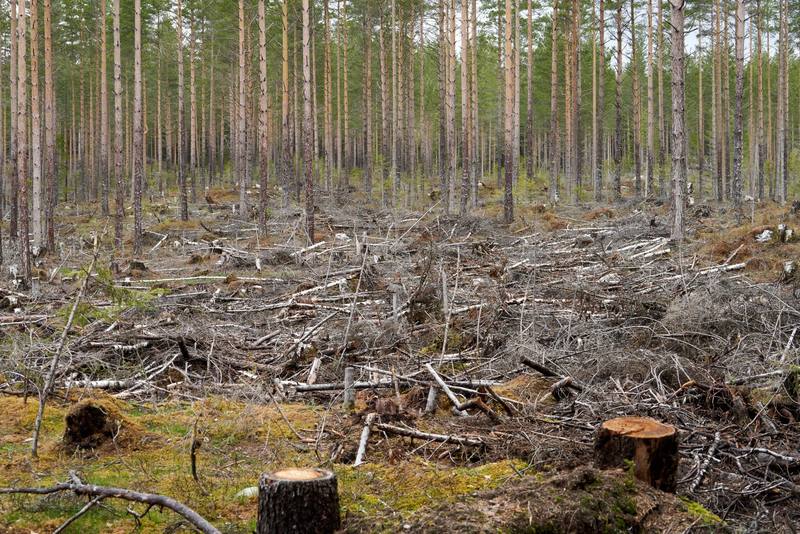



Get a quote
Request a tree service visit in Fair Oaks
Send a photo of the stump with a tape measure across it and say what you want in the spot afterwards. We reply with a quote and any questions about the gate or the ground. Call or text (279) 529-0050 or email info@stumpgrindingroseville.com.