Tree Service in El Dorado Hills, CA
We take down and trim trees across El Dorado Hills, working around the shallow soil over rock and the native oaks that shape most jobs here.
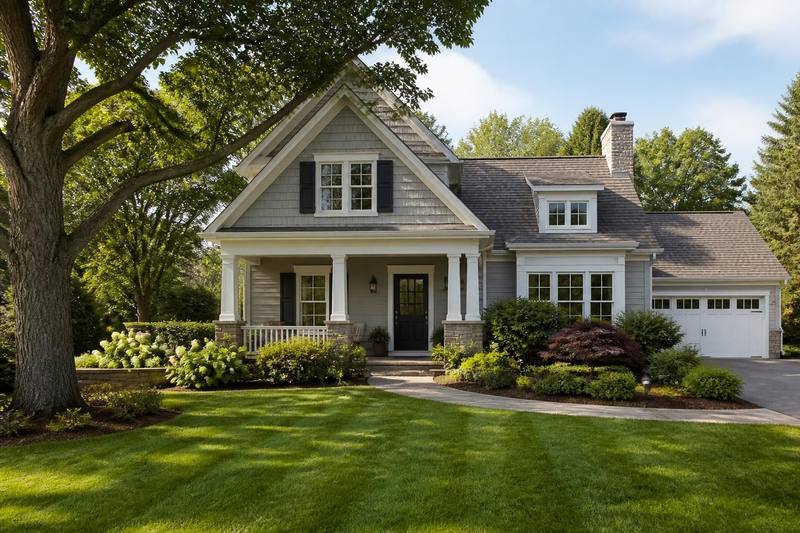
Tree service in El Dorado Hills usually means one of four jobs: tree removal, trimming and pruning, storm cleanup, or stump grinding after the tree is down. We drive in from Roseville, about 9.7 miles away. Thin soil over rock and long, dry summers followed by wet winters shape almost every one of those jobs here.
Tree removal in El Dorado Hills
Most tree removal calls in El Dorado Hills come from two kinds of lots. The first is a yard in an older village such as Ridgeview or Saint Andrews, where a tree planted with the house between the late 1960s and the mid-1990s has outgrown the roof and the side yard. The second backs onto the open space the master plan left between villages, where a native oak or pine stands near the fence and a side gate is the only way in. Neither leaves room to drop a big tree in one piece.
Sectional takedown on tight and sloping lots
A sectional takedown removes the tree a length at a time, starting at the top, instead of felling it whole. A climber or a lift works down the trunk, cutting pieces small enough to drop into a cleared spot or lower on a line. On a yard that slopes away from the house, each length must also be kept from rolling into a fence below.
Rigging over roofs and pools
Over a roof or a pool, each heavy limb is tied off and lowered on a line instead of being let fall. The line runs up through a block in the tree, and a ground worker lets it out through a friction device so the limb lands where it was aimed. Ask any tree company you call how it will rig a tree that leans over the house or pool.
Dead trees and storm damage
Dead trees are riskier to take down than live ones, because dry limbs can snap under a climber or a loaded rope. Long, dry summers are hard on a tree with little soil for its roots, and a pine weakened that way often draws bark beetles. After a storm the hazard is different: a split trunk or a limb hung in the crown is under tension and can spring or roll as the weight comes off, so it is cut out a small piece at a time.
The chipper and the haul-away
Branches go through a chipper parked at the curb, which reduces a yard full of brush to a load of chips. Ask whether the quote covers hauling the chips and trunk wood away, or cutting the trunk into rounds you can keep.
Trimming and pruning El Dorado Hills trees
Late fall through winter is the best time for most tree pruning in El Dorado Hills, while deciduous trees are bare and the summer heat is months away. Trimming is the routine side of tree care. Good trimming clears limbs off the roof and takes weak wood out of the crown before a winter storm breaks it out. Ask any tree service to walk you through each cut before the saw starts.
Crown thinning on mature native oaks
Crown thinning takes a few branches out of the inside of a canopy so wind passes through rather than pushing the tree like a sail. On an old valley oak, or any mature native oak, the list of cuts should be short: deadwood first, then limbs that cross and rub. Lion-tailing, which strips the inner branches and leaves foliage only at the tips, weakens a tree and should be refused.
Deadwood and limbs over the roof
Deadwood is the dead branch wood in a crown, and it is usually the first thing to come down in a winter wind. After a dry summer it is also brittle fuel over the roof and the deck, so it is worth cutting out before it falls. A limb on a power line is a call to the utility before anyone cuts near it.
When to prune citrus trees in California
Late winter or early spring, after the last frost and before the new flush of growth, is the time to prune citrus trees in California. Citrus needs only light pruning, mostly dead twigs and the suckers that sprout below the graft. Leave the leafy canopy alone, because bark that a heavy cut suddenly exposes can sunburn and split in the summer heat here.
El Dorado Hills soil, roots and wind-thrown trees
The USDA soil series mapped around El Dorado Hills explain why trees here root shallow and tend to tip over at the roots in a storm rather than snap. Three map units sit around the town: Argonaut, Auburn and Rock outcrop. All three are in hydrologic group D, the group where water moves through the ground slowly and much of the rain runs off instead of soaking in.
Argonaut and Auburn: rock not far down
Argonaut and Auburn are both rated well drained, yet both land in group D because a restrictive layer lies close under the surface. Auburn soils are shallow to moderately deep over rock, and Argonaut has a dense clay subsoil with rock below it. Roots that reach the clay or the rock turn sideways, so a big tree here often stands on a wide, flat root plate.
Trees rooted around rock outcrop
Rock outcrop is exposed bedrock with little or no soil over it. A tree beside an outcrop wraps its roots around the stone and into its cracks, which anchors it well until a crack widens or the soil around it washes out. Rock changes a removal too: a tree service has to pick each log's landing spot clear of stone, and the stump grinder works around rock at the base of the trunk.
Why trees blow over in winter storms
Wind-thrown trees in El Dorado Hills usually go over in the wet season, when rain cannot drain through the clay or rock and the shallow root zone turns soft. One strong gust is then enough to pry the whole root plate up, and it often comes out with a slab of turf still on top. Cracked or heaved soil on one side of a trunk after a storm means the root plate has started to lift, and that tree needs a look before the next storm.
How far an oak tree should be from a house
A large oak should be at least 20 to 30 feet from a house, and a broad-crowned valley oak needs the upper end of that range. Oak roots run well beyond the drip line, and over shallow rock they stay in the top layer of soil, where footings and patios are dug. Being close to a house is not, by itself, a reason to remove an oak. Most of the harm comes from trenching through the roots or from watering a lawn under a native oak in summer, which invites root rot.
When to call an arborist in El Dorado Hills
Call an arborist first when the real question is whether a tree can be saved. An arborist looks at the tree's health and structure, from the root flare and trunk to the main unions and the crown. That makes it the right first step for a big native oak, or for a tree near the house that has started to thin or lean.
When El Dorado County or a homeowners association wants an arborist report before it signs off on tree work, have it written by an ISA-certified arborist, and ask for the certification number before the visit.
Before you hire a tree service, get these four things in writing:
- Which trees will be felled whole and which taken down in sections, and what is underneath each one.
- Proof of current liability insurance, sent to you by the insurer rather than handed over by the crew.
- Whether the stump and the haul-away are separate lines on the quote.
- Whether anyone has asked the county or your association if the tree needs approval, and what they said.
Stump grinding after the tree comes down
A stump grinder takes the stump down 6 to 12 inches below grade, deep enough for new turf or a planting bed. The spinning wheel and its carbide teeth reduce the wood to a mound of chips and soil, which either goes back into the hole or gets hauled away and replaced with topsoil.
On Argonaut and Auburn ground the wheel often meets rock at or just under the base of the trunk, so the operator probes around the stump first and grinds as deep as the rock allows. Where rock stops the wheel short, a few inches of topsoil over the hole still gives grass a start, though a new tree in the same spot will have little room to root.
Having the stump ground on the same visit as the removal saves a second trip with heavy equipment across the yard, so ask whether a tree service quote includes it. Stumps are the core of our work, and our page on stump grinding in El Dorado Hills goes further into oak stumps and backfill.
Nearby towns for tree service
Our crews also cover the towns nearby: Folsom, Granite Bay and Orangevale, with the same tree care services in each. Tree rules change from one town to the next, because each answers to its own city or county office, so ask the one that covers the address before the first cut.
Local details for El Dorado Hills
- ZIP codes: 95762
- Distance: About 9.7 miles away in a straight line
- Main soils (USDA soil survey): Argonaut (well drained, hydrologic group D); Auburn (well drained, hydrologic group D); Rock outcrop (hydrologic group D)
- Nearby: Folsom, Granite Bay, Orangevale
About El Dorado Hills: El Dorado Hills, CA on Wikipedia · El Dorado Hills on Google Maps
FAQ
Tree Service questions from El Dorado Hills
The cost of tree work in El Dorado Hills depends on two things: how big the tree is and how much rigging it takes to lower it without damage. A pine standing in an open yard comes down quickly, while a valley oak over a roof on a lot with only a side gate means roping most of the pieces down and carrying them out by hand. We give a quote once we have seen the tree. Quotes for tree services are easier to compare when each one lists the stump and the haul-away separately.
Tree removal in El Dorado Hills usually costs the least from late fall through winter, because a bare deciduous tree is lighter to rig and every limb is in plain view, so the job goes faster. Wet ground is the trade-off: rain sits on the clay and rock here, and a soaked lawn ruts under heavy equipment, so a dry stretch between storms is the best window. Spring is nesting season, and an active nest can put the work on hold.
El Dorado County sets the oak rules in El Dorado Hills, because the town has no city government of its own, so ask the county before cutting any oak. Ask about heavy pruning and digging near the roots as well, since a rule can cover more than taking the tree down. If your home is in a village with a homeowners association, check its landscape rules too, and keep every answer in writing.
Services
Services in El Dorado Hills, CA

Get a quote
Request a tree service visit in El Dorado Hills
Send a photo of the stump with a tape measure across it and say what you want in the spot afterwards. We reply with a quote and any questions about the gate or the ground. Call or text (279) 529-0050 or email info@stumpgrindingroseville.com.